Rachel Kushner is a New York-based writer whose work has appeared in The New York Times, The Paris Review, The Believer, Artforum, Bookforum, Fence, Bomb, and Grand Street. Her debut novel, Telex from Cuba, was a New York Times bestseller and finalist for the 2008 National Book Award.
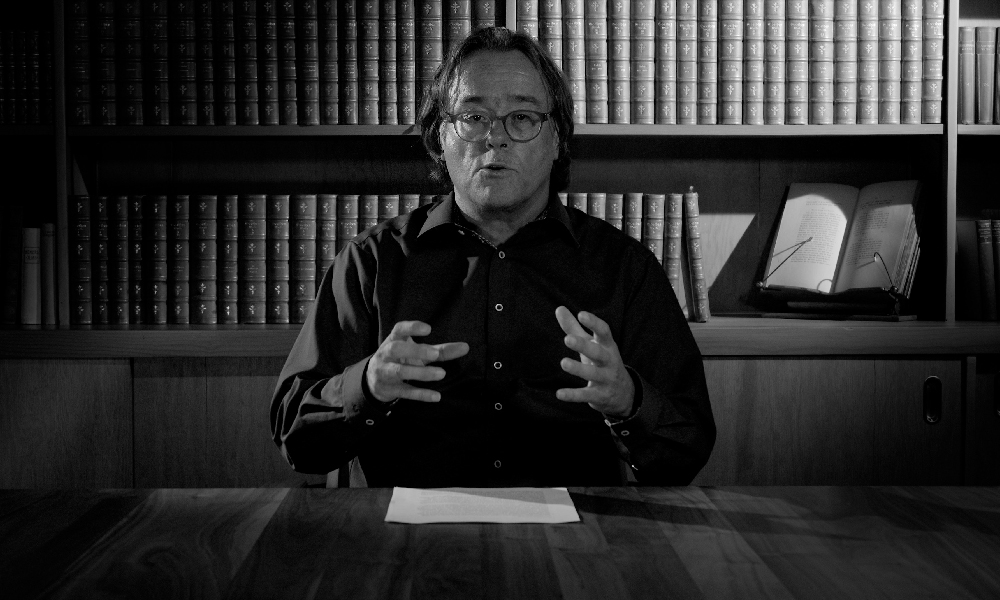
Watch this recent LARB interview with Rachel Kushner at the LA Times Festival of Books.
Southern literature scholar Michael Bibler interviews James Franco about his new adaptation of William Faulkner’s As I Lay Dying:
Filmed on location in Faulkner’s northern Mississippi, the film follows the epic journey of the Bundren family as they battle flood, fire, injury, and insanity to bury the mother, Addie, in her hometown of Jefferson. The novel is told in a series of 59 monologues spoken by 19 characters, giving it the feel of both a fragmentary dramatic script and a series of internal meditations, making it exceedingly difficult to translate to other media. As Mr. Franco explains below, bringing the novel to film poses interesting opportunities and challenges for anyone trying to capture and reimagine both the peasant realism and the modernist surrealism of Faulkner’s self-proclaimed tour-de-force. The film has already generated a great deal of buzz and will no doubt be the subject of much discussion, academic and otherwise, in the years to come.
“So how to confront what happened in 1950s Kenya?” Katie Engelhart reviews Huw Bennett’s recent history of the Mau Mau Uprising:
The conceit is that bumbling Britain managed a more graceful exit from Empire than its imperial peers. Recently, this seductive logic has been challenged — not least by the conflicts in Iraq and Afghanistan, which have renewed interest in British counter-insurgency techniques. But it is still a dominant paradigm shaping Britain’s postcolonial self-history.
Image 1: Far away from the ocean, the New Century Global Center in the Sichuan city of Chengdu nonetheless features a marine theme. Not only does its undulating roof call waves to mind, but the completed building will have inside it: an artificial beach, a water park and fountains, along with many other amenities. (© Tong Lam)
Image 2: A banner in an old Chengdu neighborhood reads: “Fortune Global Forum: A Global Event at the Doorstep.” The invitation only forum will be attended by the CEOs of the Fortune Global 500 companies, as well as political leaders from around the world. Many people in the neighborhood have heard of the forum, but few understand what it is all about. (© Tong Lam)
The Ultimate Pleasure Dome
by Tong Lam
In the immediate wake of World War II, George Orwell published a short essay called Pleasure Spots in which he predicted the arrival of large-scale pleasure facilities that people would be able to visit to escape from the real world. The “pleasure spots” of Orwell’s imagination would be enclosed and mediated environments with regulated temperatures, constant music, and endless entertainment. It would be a place where sensual pleasures and excitements were generated, while the individual’s thinking and curiosity was desensitized. In our times, pleasure spots such as resorts, theme parks, and cruise ships are no longer novel.
However, the ultimate pleasure spot exclusively for the super-rich and powerful has yet to arrive. The wait, though, is almost over. Roughly 1,000 km from the Chinese coast, a giant pleasure dome called New Century Global Center is rising from the bottom of the Sichuan basin in the new financial district of Chengdu. The building has 1.5 million square meters of floor space, or nearly three times that of the Pentagon in Washington, D.C. It is now the world’s largest standalone structure, indeed, large enough to fit 20 Sydney Opera houses inside.
According to the plan, the building will have a water park, an artificial beach, commercial complexes, shopping arcades, an IMAX cinema, a skating rink, and two luxury hotels with “seaside views.” It is no coincidence that the complex will be one of the venues used when the Fortune Global Forum is held in the city next month. The annual conference organized by the Fortunate Magazine will be attended by the CEOs of the Fortune Global 500 companies, as well as Chinese and international leaders.
When these leaders arrive in Chengdu in early June, the pleasure dome will not only shelter them from the smog that often blankets the city, it will also insulate them from experiencing the rising social discontents and economic disparity of this aspiring megacity. The Foxconn plant in Chengdu, for instance, has had its share of riots and industrial accidents since its opening a few years ago. Then, during the first weekend of May (a politically sensitive time, as it included the anniversary of one of China’s most important early twentieth-century protest waves, the May 4th Movement of 1919) thousands of police officers swarmed to key locations in the city, including its central square, after some local netizens called for demonstrations against the construction of an oil refinery near the city. At the end, there was no Jasmine Revolution-like event, no significant rally, in part perhaps because, in addition to ramped up security, the authorities (in a touch NPR’s Louisa Lim called “Orwellian”) shifted the start of that week’s “weekend” to Monday, so that students had to attend school and some workers had to work on what might have been a protest day.
For now at least, China’s “economic miracle” is still enabled by heavy-handed state policies, low cost labor, diverting forms of consumption and entertainment, and an array of contradictions. For now, the Global Center, a simulacrum par excellence, will shield global business leaders and state officials from the mounting social pressures for change. The ultimate pleasure dome, in a way, is also a counter-pressure dome.
Next week at the New School: Dissent Magazine presents China’s 99%. A panel discussion featuring Jeffrey Wasserstrom, Maura Elizabeth Cunningham, and Megan Shank. Get more info here.
“To keep a person on the Scientology path, feed him a mystery sandwich.” Michelle Kuo and Albert Wu on L. Ron Hubbard and the secret history of Scientology:
It was during these years at sea that Scientology adopted the malevolent, secretive character for which it is now infamous. The period left a “legacy of […] belittling behavior toward subordinates and […] paranoia about the government,” Wright writes. “Such traits stamped the religion as an extremely secretive and sometimes hostile organization that saw enemies on every corner.” During this time, Hubbard expanded his theories and instituted a new system of punishments to address disciplinary issues (including crew members who questioned his command or relationships of which he disapproved). When a Sea Org executive was unable to connect a steel cable on the dock during a storm, Hubbard ordered him thrown into the sea. After that, Wright reports, “overboardings became routine.”
Photo: Director Terrence Malick and actor Christian Bale at Austin City Limits. Courtesy of Daily Motion.
Michael Nordine on celebrity and the elusive Terrence Malick:
“Now more than ever, it seems we still can’t conceive of a famous person who doesn’t want to be famous, and even caricatures are more satisfying than a note reading “not pictured” in the celebrity yearbook.”
Lisa Levy takes on self-help books and the “pseudo-intellectual” in her discussion of Alain de Botton’s series published by The School of Life:
Is the very idea of an intelligent self-help book a paradox? It is certainly trying to serve two demanding masters: philosophical speculation and practical action. After all, readers don’t pick up self-help books just to ruminate on life’s dilemmas, but to be guided to solutions. The new series of self-help books published by the London-based School of Life, co-founded by the Swiss-born popular philosopher Alain de Botton, echoes the school’s lofty approach to problems, claiming to be “intelligent, rigorous, well-written new guides to everyday living.” Yet to peruse the School of Life’s calendar of classes is to fall into a vortex of jargon pitched somewhere between the banal banter of daytime talk shows and the schedule for a nightmarish New Age retreat.
Colin Marshall interviews Anna Stothard, author of The Art of Leaving, about her latest novel, The Pink Hotel.
I lived in Thai Town and Little Armenia, in this apartment block full of just all different sorts of people. And I found that, not driving — I have never driven — I just found that I walked this version of Los Angeles that none of my friends seemed to know anything about. And I’d walk out of my apartment and there would be a huge Armenian wedding going on, and then you’d pass through the crowds of these Armenians and you’d get Thai children peeling oranges on a street corner for a Thai altarpiece. And the Armenian men never whistled at me, the Armenians never seemed to talk to the Thai people. There were all these different layers of the city that nobody seemed to cross over. And then a porn star would jog by and the Thai people wouldn’t notice the porn star. And I like this idea that everyone says that LA is all these suburbs looking for a city. But actually in every little bit of Los Angeles there are so many different layers. And you just have to look beyond the cliche of Los Angeles.
— — — —
Rebecca Liao reads Niall Ferguson’s gay-baiting career:
During a Q&A session last Friday at the Altegris Conference in Carlsbad, California, noted economic historian Niall Ferguson asserted that John Maynard Keynes did not think long-term because he was homosexual, childless and effete, preferring to read “poetry” to his wife rather than procreate. Outrage came swiftly, and Ferguson responded Saturday morning with an unreserved apology for his “stupid and tactless” remarks.
As far as public apologies go, many have noted the skillful completeness of Ferguson’s. Oliver Burkeman at The Guardian went so far as to say that it was too good to be true. He turned out to be right: Ferguson lambasted those who were unsatisfied with his first apology as “insidious enemies of academic freedom” in an open letter to the Harvard community (Link).
Trouble is, Ferguson has made the same sort of bigoted, non sequitur argument before about Keynes. In his 1999 book The Pity of War, he had this to say of the economist’s (wrong) prediction in late 1915 that Britain’s economy would collapse if WWI did not end soon:
Though his work in the [British] Treasury gratified his sense of self-importance, the war itself made Keynes deeply unhappy. Even his sex life went into a decline, perhaps because the boys he liked to pick up in London all joined up.
The suggestion is that Keynes had a particular hankering for the war to be over so that his pool of homosexual partners could be replenished.
Still, Ferguson should not be further punished for apologizing only after a public storm. Apology accepted. But no amount of contrition can close the door he had just opened to what were once merely disconnected and silent musings about the exaggerated masculinity of his work.
When a heterosexual man uses “gay” as a criticism, especially when leveled against a dead man, he is putting down another’s manliness as a means of beating his own chest. It does not help that the word “effete” would not make any sense in this context except to underscore how unmasculine gay people are. Ferguson therefore eliminated any chance to claim that he had meant for “gay” and “childless” to be redundant.
An unapologetic display of machismo has always been integral to Ferguson’s ideas. His gleeful provocation of leftists (i.e. the insufficiently strong and individualistic) began while a student at Oxford in the 80s with a Thatcherite hatred of “wet” Tories. He then strong-armed his way into intellectual legitimacy with a pro-imperialist economic history of the British Empire. His most recent book, Civilization: The West and the Rest, reaffirmed his paternalistic belief that British colonialism had a largely beneficial effect on the colonized countries, not least because it civilized them through economic development and brought them under the wing of British humanitarianism. As author Pankaj Mishra and many before him have pointed out, Ferguson has made these points while rationalizing the great loss of life, culture, and national resources in former colonies. Not to mention that the inherently debilitating effects of subjugation barely register in his assessment. His faith in the inherent benevolence of robust, muscular intervention in less developed countries has attracted many accusations of white-male solipsism.
He more or less carries on that mantle in his current preoccupation with the decline of the West. The geopolitical threat of the Middle East had him lamenting the West’s “pusillanimity,” though he denies that he is a hawkish neoconservative. On the other hand, despite expressing concerns with the stability of its authoritarian regime, he has looked on China with admiration, especially when it comes to the country’s economic success. Never mind the threat that also poses to Western supremacy.
It is not surprising that Ferguson would favor China since he confesses in Civilization that he left Britain for America because that is where “the money and power actually were.” Among his many talents is a knack for finding an amenable home for an aggressive instinct. He stated in an interview in 2011 that he took his current position at Harvard because the American intellectual culture glorified his brand of “excessive vehemence” whereas the British would not tolerate it. He made the right bet with America, and his broad-sweeping ideas and unshakeable confidence have made him a star on the Davos-TED-Aspen circuit.
It remains to be seen whether last week’s remarks will dull the popularity of his intellectual output among that glamorous circle. Of all possible hints Ferguson has offered over the years of a source for his many ideological loyalties, there has never been one so visceral, and therefore with the same ring of truth. To finally blurt such strong evidence of a powerful urge to assert his masculinity in his ideas is the crack of vulnerability he’d been trying to avoid all along. Without that crutch of authority, one wonders if, from now on, he will be searching for a new hint of indifference from his audiences.
— Rebecca Liao
May 11, 2013
Rebecca Liao [bio here] is a regular contributor to the Los Angeles Review of Books; her pieces on China’s 2012 yearbook is here; her piece on fashion here.