A Q & A With Pankaj Mishra
by Jeffrey Wasserstrom
Pankaj Mishra, whose latest book Drew Calver reviewed for this periodical, has surely been a familiar name to many Los Angeles Review of Books readers for some time now. They may have first become familiar with him via one of the many pieces he has done for periodicals such as the New Yorker, through one of his earlier nonfiction books, such as An End to Suffering: The Buddha in the World, or by reading the profile Jennifer Schuessler did of him for the New York Times. In my case, I first encountered his name while looking for something on his native India to assign in a survey of the world in the twentieth century. Browsing in a bookstore in Bloomington, Indiana, where I was teaching at the time, I stumbled on The Romantics, his first and so far only novel. I found it a wonderfully engaging read (and very teachable).
The Ultimate Pleasure Dome


by Tong Lam
In the immediate wake of World War II, George Orwell published a short essay called Pleasure Spots in which he predicted the arrival of large-scale pleasure facilities that people would be able to visit to escape from the real world. The “pleasure spots” of Orwell’s imagination would be enclosed and mediated environments with regulated temperatures, constant music, and endless entertainment. It would be a place where sensual pleasures and excitements were generated, while the individual’s thinking and curiosity was desensitized. In our times, pleasure spots such as resorts, theme parks, and cruise ships are no longer novel.
Mountaintop Retreat


by Maura Elizabeth Cunningham
Toxic air pollution, avian flu, dead pigs floating down the river, rat meat sold as lamb in local restaurants, bottled water that might not be safe to drink… Life in Shanghai is starting to feel like it brings a daily revelation of threats to our environment and health. Even the hardiest city-dweller might want to escape the chaos from time to time, and so when a friend offered me the opportunity to join a weekend trip he had organized to the mountaintop retreat of Moganshan, one of my favorite places in China, I jumped at the chance.
Science Fiction in China: A Conversation with Fei Dao
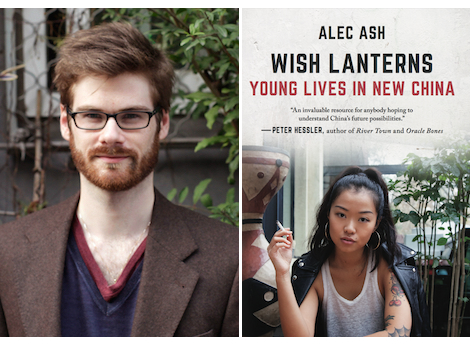
![Science Fiction in China: A Conversation with Fei Daoby Alec Ash
Fei Dao, a science fiction writer born in 1983, chose for his pen name the two characters for flying dagger (飞刀). When he achieved some success, he changed the second character to another, also pronounced Dao (氘), that made the nom de plume sound less jejune.
Science fiction in China is attracting special interest of late. The mind-bending trilogy Three Body by Liu Cixin has been selling strong for its genre. Sci fi is also a theme of the new edition of the Beijing-based (English language) literary magazine Pathlight, slated to come out next week. Alice Xin Liu, managing editor of the magazine, tweeted Chinese scifi is, politically, most daring genre in Chinese contemporary literature.
So, who should we be reading? Does this sci fi have Chinese characteristics? What is its history in the mainland? And does it matter?
I sat down with Fei Dao in Tsinghua university, where he is studying comparative literature, to ask him these questions and more. Here it is, straight from the horses mouth.
Alec Ash: How did you start writing science fiction?
Fei Dao: When I was at middle school, 16 or 17, I started to read a lot of sci fi. I read the magazine Science Fiction World, and became more familiar with sci fi literature. I liked it because there was a lot of imagination and novelty in it. At that time, my dream was to become an author. When I started out, I didnt think at all about writing science fiction. Back then I felt sci fi was very difficult to write, and needed some knowledge of science, so I could only appreciate it but not write it myself.
Like many post 80s authors, I started out writing campus stories about young people in school. But I couldnt get them published. Until one day in university, I wrote a science fiction story on the side, and sent it in to Science Fiction World. I was just giving it a go, I had no idea that that first story would get published [in 2003]. A year later, I had another idea, and that second story also got published. So that encouraged me, and I started writing sci fi.
AA: How popular is sci fi in China?
FD: In my opinion, its mostly popular among young people. This has a big connection to Science Fiction World, because a lot of students at middle school and university buy that magazine. It has a very large readership. But after people graduate and start to work, most people dont read science fiction. They think its just youth literature and that grown-ups should read more mature stuff, not childish stuff.
AA: How do you feel about that?
FD: Of course I dont think its childish literature. But Science Fiction World is, after all, for young readers. The whole feel of the magazine is like that. So while there is lots of mature science fiction for grown-ups, the readers are still mostly young.
I feel lots of people are prejudiced against sci fi. They think that if youre a certain age and still read sci fi, thats immature and unrealistic, like you are letting your fantasies run wild. So I think that prejudice is a problem. But now that Three Body (三体) [by Liu Cixin] has been publically praised, I hope that is slowly changing peoples opinion.
AA: Who are the Chinese authors we should read?
FD: The most popular authors now are Liu Cixin, Han Song and Wang Jinkang. Those three are the most famous at this time. Some people jokingly call them the three generals.
AA: What is unique or particular about Chinese science fiction?
FD: Chinese sci fi has about a hundred years of history. When it started, in the late Qing dynasty around 1902, it was chiefly concerned with the problem of bringing ancient China into modernity. At that time, Liang Qichao [translated sci fi] because he thought it would be beneficial for Chinas future … as something that could popularize scientific knowledge. And Lu Xun thought that if you gave ordinary people scientific literature to read, they would fall asleep. But if you blended scientific knowledge into stories with a plot, it would be more interesting. [He thought that] in this way, the people could become more modern.
So at that time science fiction was a very serious thing to do in China that could allow ordinary people to get closer to modern scientific knowledge, and serve as a tool for transforming traditional culture into modern culture. It played a very important role, and had a serious mission to accomplish.
Today, there is a commercial publishing market for sci fi, and people dont have such weighty expectations of literature, yet authors are still discussing serious topics. Three Body by Liu Cixin or Subway (地铁) by Han Song both have many reflections about the direction of this country and of humanity. So this kind of writing can convey concerns about the future, or discuss the current situation in China.
For example, Han Songs Subway is about a subway station. In China, subway systems are an emblem of modernization. Many cities in China are building huge subway systems, because to have one or not is the standard of a citys modernity and development. So in discussing this symbol, Han Song seized on a sensitive point. After publishing Subway, he wrote another book called Highspeed Rail (高铁), another emblem of technological innovation. So Han Song is consistently concerned with the potential catastrophes of the process of modernization.
Liu Cixin, on the other hand, is expressing a more grand feeling of the universe in the tradition of Western sci fi. In doing so, he wants Chinese people to look up at the sky, and not just be concerned with earthly matters. The mainstream of Chinese literature is about real-world subject matter, such as the countryside or urban life. Very few people are concerned with the fate of humankind, the future of the universe, or even aliens. These things are themselves alien to Chinese readers, but can be introduced through this kind of writing.
I think that the key theme of Chinese science fiction, no matter how it develops, is how this ancient country and its people are moving in the direction of the future.
AA: What is the relationship between Chinese sci fi and the culture and censorship authorities?
FD: Because Im an author not a magazine publisher, Im not sure precisely what the relationship between them and the censorship department is. But in China, no matter what the subject matter of literature is, you have to communicate with the censorship department. For example, if you write realistic fiction about a sensitive subject, youll also come up against objections. Its the same for sci fi.
AA: Is there a big Western influence on Chinese sci fi?
FD: Science fiction is a new variety of literature [in China]. Before a hundred years ago, it had no frame of reference, so it just studied Western works. Of course there were native influences too, but in the end the learning process was from the West. [Chinese] sci fi writers today have also read a lot of Western sci fi. Theyre very familiar with it, and its given them a lot of inspiration. For example, Liu Cixin emphasizes his admiration of Arthur Clarke.
AA: What are the other main influences?
FD: Theres also a big influence from Japan. Historically there were a lot of Japanese [sci fi] stories translated into Chinese. Jules Verne was also first translated from Japanese into Chinese. And contemporary Japanese sci fi, for example Japan Sinks (日本沈没) by Sakyo Komatsu, is very popular in China. Anime and manga are also an influence, but only starting from the post 80s generation … because that is the generation where TV shows began to become popular.
Another big influence on Chinese sci fi is Soviet sci fi. Especially after 1949, when China had less connection to the West and more connection to the USSR, the most famous Chinese sci fi authors were most influenced by Soviet sci fi with communist themes. So there are three big influences: the West, Japan and the USSR.
AA: Who are your biggest influences?
FD: Ive been influenced by a lot of non science fiction writers, and Ive read classic Western sci fi such as [Arthur] Clarke and [Isaac] Asimov. But when I was young, one of the works that most subtly influenced me [was] a novella by Ted Chiang (姜峯楠) called Tower of Bablyon. That story gave me a new understanding of science fiction i.e. that it doesnt have to be just about technology.
In the story, they built a high tower in Babylon that became a world with different floors and people living inside. They built it bit by bit, until it reached the top of the sky. Then they burnt through the sky, and the protagonist entered into the heavens, where there was water and a sandy shore. So this world was cyclical you arrive in the heavens and its like the seabed. Its hard to explain, but this was a very serious science fiction or fantasy story, and it opened up a large imaginative space for me.
AA: Do you think sci fi is important?
FD: I do. I think that imagination is very important. People must preserve a curiosity about the future. Many people, because of everyday pressures, dont have the time or the energy to care about things that dont seem to be about everyday reality. But I think that to be curious is very important, and so is sci fi.
Read last week’s interview with Mara Hvistendahl at The China Blog here.](http://25.media.tumblr.com/94f7c1fdaa6993e4c5820f320cde7754/tumblr_mm4un8ECbb1qieieio1_500.jpg)
by Alec Ash
Fei Dao, a science fiction writer born in 1983, chose for his pen name the two characters for “flying dagger” (飞刀). When he achieved some success, he changed the second character to another, also pronounced Dao (氘), that made the nom de plume sound less jejune.
Read the whole interview here.
“From Maternity Wards to the Bird Flu Beat”: A Q&A with Mara Hvistendahl
Photo: Jeffrey Wasserstrom, Shanghai, March 2013.
My first contact with Mara Hvistendahl, a talented Shanghai-based journalist who is a contributing editor and writer for Science and the author of the acclaimed book Unnatural Selection, goes back to 2008. At the beginning of that year, we both grew fascinated by Shanghai’s first Not-In-My-Backyard protests. The goals of most Chinese NIMBY actions have been to force the closing or relocation of toxic factories, but early 2008 was an effort by residents of central Shanghai to stop the extension of the city’s magnetic levitation train line into their neighborhood. Crowds took to the streets, in part because they were worried about the noisy superfast train hurting local property values, in part because of vague rumors about the lines posing health risks, but largely because people living in the affected area simply felt that they should have had a chance to weigh in on an urban redevelopment project that would have a dramatic impact on their lives. The protests succeeded: the line has never been built. This high profile action also probably helped inspire some of the other demonstrations in different Chinese cities that have taken place since early 2008, just as 2007 protests in Xiamen that succeeded in forcing a noxious chemical plant to be relocated played a role in emboldening the Shanghai protesters.
“Cute Policing”
by Tong Lam (photo © Tong Lam)
A lot has been said on the rise of China’s soft power in the international arena. What is less often discussed is the rise of policesoft power in urban China in recent years. Indeed, although policing has always been a central component of the government’s penetrating apparatus of social control, Chinese police forces have recently begun to adopt a softer image in certain contexts. For example, residents of Chongqing still vividly recall the young, heavily made-up female traffic cops introduced by the former local party chief Bo Xilai. Similarly, when Bo was the mayor of the city of Dalian in the 1990s, he also instituted the idea of having young and good-looking female police officers patrolling the city center on horseback, a practice that has apparently outlasted Bo’s political career.
“A Tale of Two Viruses”
By Maura Elizabeth Cunningham
Despite public concern about the emergence of H7N9 bird flu in Shanghai, only a handful of pedestrians walking along the waterfront Bund on Monday, April 8 chose to don face masks. Those who did opt for the protective gear likely did so not out of pandemic-related fears, but because of the light smog hanging over the city; at 5pm, when this photo was taken, the air quality was rated as “Unhealthy” by the U.S. Consulate’s Twitter feed. Image © Maura Elizabeth Cunningham.
April, 2003 - I am almost finished with my junior year of college, working evenings and weekends and any other hours I can squeeze out of the day as a clerk in the emergency department of a South Philadelphia hospital. I am desperate to escape Philadelphia and have signed up for a summer course in Beijing; I’ve never been to China before and am not even entirely sure I want to go, but am drawn by the fact that Beijing is literally on the other side of the world from my hometown, precisely twelve time zones away.
Read more.
“Travels in China”: A Brief Encounter with a Mountain Mystic

by Alec Ash
The Taoist priest looked at me askance and guessed correctly that I was British.
I was in his temple three days before the Chinese new year, following a friend from the area who was there to light incense and drop money into the collection box for good luck in the year ahead. The red-faced deity guarding the box stroked his meter-long beard and accepted the bribe.
“From Pride and Prejudice to Who Moved My Cheese”: A Q & A with Helen Gao
Four weeks ago, this blog ran an interview I did with Xujun Eberlein, in which the China-born but now American-based writer responded to questions I put to her about literature, translation, and the flows of books between her native country and the one she now calls home. Her answers were so interesting that I decided to put similar ones to Helen Gao, who grew up in China a couple of decades after Eberlein, spent two years at an American boarding school, did an undergraduate degree at Yale, and is now a Beijing-based freelance writer. Gao has written for various publications, including the Atlantic, and has a chapter on the controversial novelist-racecar-driver-blogger Han Han in China Stories, an e-book published by the Los Angeles Review of Books. - Jeffrey Wasserstrom
Read the interview here.
Ghost Malls of the Instant Cities

by Tong Lam
When the South China Mall (later renamed the New South China Mall) opened its doors in Dongguan, Guangdong province in 2005, the Western media hailed it as a symbol of China’s new consumer age. With more than 7 million square feet of leasable space, the mall was supposed to have over 2,300 stores and was meant to be the largest in the world. The developers estimated that the mega mall would attract at least an average of 70,000 visitors a day. As a comparison, the Mall of America in Minnesota, the largest in the US, is only about one-third of that size. Even the massive West Edmonton Mall in Alberta, the largest in North America, pales in comparison. In their initial promotional material, the developers boasted that the mall would become a “one stop consumption center” and “a global business model.”
“The Good Wife”: Reconsidering The Good Earth’s O-lan
By Maura Elizabeth Cunningham
Prequels, sequels, and alternate-perspective takes on famous novels abound in the publishing world today. In March, Geraldine Brooks imagines the life of Little Women’s absent father as his family awaits his return from the Civil War. The Wind Done Gone offers a slave’s viewpoint on the events of Gone With the Wind; a new book will soon recount Pride and Prejudice from the servant’s corner of the drawing room. Probably the most famous of these re-imaginings, Gregory Maguire’s best-selling Wicked (also a hit Broadway musical) reveals that the Wicked Witch of the West has been misunderstood by those who only know Dorothy’s side of the Wizard of Oz story. And while re-tellings have flourished in recent years, there are older examples of the practice, too: Wide Sargasso Sea (a prequel to Jane Eyre) and Rosencrantz and Guildenstern Are Dead (a play revolving around two minor characters from Shakespeare’s Hamlet) both appeared in 1966.
There’s also a long Chinese tradition of playing around with famous works of fiction. Dream of the Red Chamber, the country’s most famous novel, has yielded a dozen sequels or more, such as Shadows of Dream of the Red Chamber (1877) and The New Story of the Stone (1908). As far as I know, though, no one has yet given similar treatment to the most famous novel about China written in English: Pearl Buck’s 1931 bestseller, The Good Earth.
“The Last Good Earth”

by Alec Ash
This Chinese spring festival, I read Pearl Buck’s 1931 novel The Good Earth in the perfect location – the farmlands of Anhui where the book is set. (Read my LARB co-blogger Maura Cunningham’s take on the book here, and check back next week for more analysis.)
Wang Lung, the protagonist, is a farmer who survives famine to strike it rich, eventually moving out of his old home on the land into a great house in town to establish his family in. The countryside of Anhui is no longer famine stricken, but is just about as poor, relative to the rich parts of China, now as then. An hour out of the nearest town (in this case Fuyang in the far northwest), you hit acres of maize fields and hamlets of unheated courtyard houses, still out of reach of paved roads.
So the land is still there – but the farmers are gone. It’s a familiar tale that over the last twenty years, urban migration has stripped the Chinese countryside of its able bodies, as they seek better paid work in the city. As one of them told me on the train to Shanghai, “Where there is money, that’s where my dream is.” Wang Lung, for all his professed love of earth between his toes, would have followed them – as indeed he did in the harshest winter, boarding a “fire wagon” to a rich southern city to work as a rickshaw driver.
In the Wake of Finnegan: A Q&A with Xujun Eberlein

This week’s Q & A is with the China-born and now Boston-based Xujun Eberlein, a short story writer, blogger, essayist, and contributor to LARB.
I contacted Xujun in part simply because I was curious to learn her reaction to two recent literary-minded and China-focused New York Times pieces. One focused on the surprisingly brisk sales in China of a book by James Joyce, while the other was acommentary by NPR Beijing bureau chief Louisa Lim on trends in censorship and the popularity of Chinese “officialdom novels.” Both brought Xujun to mind, since she has often reflected on the flow of books and ideas between China and the West and she has written an essay on the “officialdom novel” genre.
She was good enough to break up her Lunar New Year trip back to Chongqing to speak with me.
Jeff Wasserstrom: Do you have any thoughts on why Finnegans Wake might be selling so well in China?
Xujun Eberlein: I was curious about this myself. I’m in Chongqing for Chinese New Year and I went to the Xinhua Bookstore downtown on Saturday (February 9) to have a look at the book. A young staff member led me to the desk where the Chinese translation of Finnegans Wake (the yellow cover at the center of the above photo) was on display with other new and noteworthy books. As you may see from the photo, next to Finnegans Wake is the translation of polish novelist Henryk Sienkiewicz’s Quo Vadis, which has a supplementary band to note the author is a Nobel Laureate. The red cover on the right is a Chinese popular novel titled Love SMSs. I asked the young man howFinnegans Wake was selling there and he said “Not bad.” He noted that its sales were similar to One Hundred Years of Solitude and Love in the Time of Cholera. When asked what kind of readers were buying it, he said “mostly young people.”

by Tong Lam
Increasingly, civic leaders from around the world are using designer architecture to brand their cities as sophisticated global business and tourist destinations. China is no exception. The absence of a strong civil society to challenge these intrusive projects—which are often carried out in the name of “urban renewal”—means that in many cases Chinese cities have become a playground or laboratory for foreign architects, who normally would not be allowed to carry out such ambitious projects in their home countries.
In Beijing, the big-ticket buildings that saturate the city’s skyline include the CCTV Headquarters by Rem Koolhaas, the National Stadium by Jacques Herzog and Pierre de Meuron, Terminal Three of Beijing Capital International Airport by Norman Foster, and the National Centre for Performing Arts by Paul Andreu. Completed in 2007, Andreu’s curvy structure is particularly significant because of its proximity to Tiananmen Square, the capital’s symbolic center. While the building is colloquially known as the Giant Egg, some locals have also suggestively referred to it as a big “drop of tears,” which is a not-so-subtle reference to the bloody suppression of the Tiananmen uprising in 1989.
The Artist and the Factory

Image © Li Liao
by Alec Ash
On October 9th 2012, 30 year old Li Liao reported for his first day’s work at a Foxconn factory in southern China. The colossal electronics contract manufacturer, which makes our iPhones, Kindles and Wiis, provides a livelihood for hundreds of thousands of poor Chinese. It was also the center of controversy after a spate of worker suicides in 2010.
Li Liao was issued his identity card – worker F2356272 – overalls and cap. He was shown around. On the assembly line, he was to help manufacture Apple’s latest gadget, the iPad mini. He worked there for 45 days. Then he quit, bought an iPad mini with his wages, and displayed it and his overalls as part of a contemporary art exhibit in the fashionable 798 art district of Beijing.
His boss, presumably, didn’t see that coming.
Don’t Bet on the House

The port city of Dalian’s transformation into a major metropolitan center corresponded with Bo Xilai’s long tenure as mayor, and his rise to power.
By Maura Elizabeth Cunningham
On Monday, a few dozen journalists assembled at a press conference in Guiyang to be told by local court officials what most of them had surely already figured out: China’s “trial of the century,” the prosecution of fallen politician Bo Xilai, was not taking place that day. The news reports that had sent media organizations scurrying to set up shop in Guiyang, a small city three hours southwest of Beijing that is part of Guizhou Province, were false; Bo’s trial date and location remain a mystery. The foreign correspondents who had made the trip didn’t return home with front-page stories about the country’s most eagerly anticipated courtroom appearance. Instead, they had to write about being sent on a wild goose chase.
The reporters’ willingness to travel all the way to Guiyang on the basis of thinly sourced reports might seem odd to the casual observer. But for those of us in the China-watching business, it’s understandable: Bo Xilai has not been seen in public since his spectacular fall from grace on the Ides of March last year. Once the Party Secretary of Chongqing and a potential candidate for the super-elite Politburo Standing Committee, Bo has since been stripped of his membership in the Chinese Communist Party (CCP) and accused of massive corruption, though the government has not yet filed formal charges against him. Whenever, and wherever, he is tried, Bo will assuredly be found guilty and face either life in prison or a death sentence.
The China Blog: An Interview with Historian James H. Carter
Historian James H. Carter recently wrote a piece for the Los Angeles Review of Books on a new “biography” of the “The Books of Changes,” an important Chinese classical text. Asia Editor Jeffrey Wasserstrom caught up with Carter to ask him a few questions about, naturally enough, China and biography.
JW: You began your review of Richard Smith’s new “biography” of the Yi Jing (Book of Changes) with some ruminations on the whole notion of biographies that don’t focus on individuals. If there were one other book with a tie to China you think especially worthy of a “biography,” what would it be - and who would you like to see write it?
JHC: It’s hard to eschew “actual” biographies - ones about people - because there are so many lives in China’s past that are so rich and resonant. Zhang Xueliang, who began life as the son of China’s most powerful warlord, and saw his homeland overrun by Japanese troops after his own commanders ordered him not to resist, played a key role in kidnapping Chiang Kai-shek and forcing him to cooperate with the Communists before living for decades under house arrest in Taiwan (eventually dying - at age 100! - in Hawaii), seems a more than deserving subject.

A migrant worker cleaning the façade of a brand new designer building in Chengdu, Sichuan Province. Image © Tong Lam
In recent years, China has increasingly tried to project itself as a cultural soft power. During the recent 18th Communist party congress, for example, party officials boasted about the numbers of new museums, art districts, cultural heritage sites, and other cultural infrastructures that had been created in the past decade. Yet, so far, the vast majority of Chinese migrant workers can merely participate in the country’s expanding cultural industries as unskilled service workers or physical laborers. Recommended pairings:
For reading: Michelle Dammon Loyalka’s Eating Bitterness: Stories from the Front Lines of China’s Great Urban Migration (University of California Press, 2012), a work of reportage that profiles migrant workers in the city of Xi’an.
For viewing: Jia Zhangke’s The World (Shìjiè), a 2004 film that focuses on the lives of migrant workers in an Epcot-like Chinese theme park.
This is the first of a series of posts by photographer Tong Lam, who will be a regular contributor to this blog. The contributions by this historian, author and visual artist based in Toronto - whose work I discussed on this site before - will present viewers with an image taken in China that focuses on the kinds of places, actors and actions that often get overlooked or treated superficially in mainstream coverage of that country. The images themselves will be accompanied, as this one is, by a description, a short gloss on the meaning of the shot or shots, and suggestions of books of films. - Jeffrey Wasserstrom, Asia Section Editor
The One About Shanghai

By Maura Elizabeth Cunningham
Friends was already a huge hit among young Chinese viewers when I arrived in China for the first time, in 2005. I didn’t realize just how big a deal the show was here, though, until 2007, when I stumbled across an entire shelf of “Friends English” language-learning products in a Shanghai bookstore. Read more.
What a Difference Two Years Makes (Away from China)
by Alec Ash
As with dog years, so is it with China years – one here is equivalent to several in America and Europe. When it comes to pace of change, no one else holds a candle really. The Chinese just fit more in. (The velocity of change is evident everywhere, as per the above photo taken inside one of China’s new superfast trains.)
I returned to China after two years away. It’s like leaving London shortly after the millennium and coming back for the Olympics. Recognizable, but look closer and you notice all the new things.
It’s the same with people. In two China years someone will have moved town three times, burned through as many businesses, got married, had a kid, got divorced and become incredibly fat. Meeting old Chinese friends feels like like lunch with a schoolmate after a decade. Read More.
China and North Korea: A Conversation with John Delury

Welcome to LARB’s Asia Blog, edited by regular LARB contributor and co-editor of its Asia Section, Jeffrey Wasserstrom (his most recent piece for the Los Angeles Review of Books, a review of Wiliam Gibson’s latest, can be found here). Each week, the Asia Blog will feature criticism, interviews and cultural reportage by an exciting group of writers and scholars. John Delury, a Seoul-based specialist in Chinese and Korean studies (who has also written about North Korea for this publication) recently sat down with Jeffrey Wasserstrom to discuss commonalities and differences between two of the last surviving communist states in the world.
JW: As someone who has written about and tracks changes in both China and North Korea, which was the subject of your recent LARB review, I was wondering what you think is an important but often misunderstood commonality between the two places?
JD: Everyone knows that China and North Korea are among the last surviving Communist states in the world. What is less appreciated is that both regimes have continually drawn legitimacy from nationalist, anti-imperialist sources— and still do today. That is the shared Genesis story of the PRC and DPRK— Mao Zedong and Kim Il Sung were blood brothers, partisan guerrilas fighting first to repel the Japanese invaders in the 1930s, and then to push back the American imperialists in the 1950s. And both countries share a similar national telos— to achieve “wealth and power” (in Chinese, fuqiang 富强, in Korean, kangsong taeguk 강성대국/强盛大国)— that undergirds everything else. In the same way that Mao’s portrait remains on Tiananmen Square today even though so much of Maoism has been abandoned, I think Kim Il Sung will always retain his place as national founder in North Korea, and it’s because both embody the independence, sovereignty and pride of Chinese and Koreans, respectively, in modern history.
JW: In a related vein, as you’ve doubtless read a fair number of books about individual Chinese who suffered greatly and lived to tell the tale, either in their own words in a memoir or in an interview with a journalist, did the book you reviewed for this publication remind you of any of those? Or was it just such a radically different sort of tale that that question seems off-base?
JD: As the book’s title suggests, Escape from Camp 14 probably belongs in the “escape from bondage” genre of something like Uncle Tom’s Cabin— and Harden shares Stowe’s moralistic drive to tell the story of a brave individual’s battle with evil. As I suggested in my review, Shin’s experiences both inside North Korea and after his escape could be told in a very different way. Due to his unusually horrific experience of growing up in a camp, he understood very little about his country as he headed for the China border. And once outside, he lies about his past and struggles to fit in anywhere- whether China, Seoul, or L.A. It’s interesting you suggest the comparison with “scar literature” or other personal tales of suffering in Communist China. Most of what comes to my mind along those lines is Cultural Revolution Red Guard era memoirs— but there, as you imply in your question, it’s the contrasts that are striking. Red Guards were making revolution, there is a violent, restless agency to their stories— however misguided in its goals and manipulated from above. But Shin’s tale is much more passive— in the sense that it’s about escape. And it’s ultimately deeply tragic, in a way that Harden doesn’t want to fully admit, because at the end Shin finds there is “No Escape.”
JW: Now that you follow China from a base in South Korea as opposed to the U.S., can you tell us something you find particularly interesting about the way Chinese news stories play out in the South Korean as opposed to the American press?
JD: There’s much less mystery to China here— whether of the “China threat” variety or the “China boom” type. China is not some far off, suddenly rising, future challenger. It’s a known quantity that’s been Korea’s next door neighbor for a couple thousand years. So the coverage tends to be more pragmatic and prosaic. Also less global— the focus is on how China is impacting Korea, whereas Americans tend to pay more attention to the global dimension of China’s rise— as a global superpower society naturally would.
JW: Finally, anything strike you as worth sharing about South Korean views of the nearly simultaneous 2012 leadership decisions and rituals in two big countries that matter a lot to South Korea? I mean, of course, the events that the former Beijing-based and now D.C.-based Richard McGregor of the Financial Times has been referring to as the American election and Chinese selection?
JD: South Koreans are somewhat preoccupied by their own presidential election coming up in December, an interesting topic in itself. But to be sure there’s still lots of attention paid to what’s going on in the two “whales” that the Korean “shrimp” has to swim between— the US & China. Generally Koreans like Obama— the US-ROK alliance reached new heights in his first term. So his victory was welcomed. The one caveat is that the majority of South Koreans want to change the approach to North Korea that Seoul and Washington have jointly pursued in the last four years. So there is some concern about how Obama will adapt to increased inter-Korean cooperation and a less hardline policy toward Pyongyang.
On China, the Hu Jintao era has not been a particularly warm one in terms of official relations, but the economic relationship is already absolutely critical to Korea and only growing in significance. So people here hope the new leader in Beijing will form a closer bond with the next leader in Seoul (the outgoing South Korean president has also been criticized for not working hard enough on the China relationship). If inter-Korean relations improve, that could help— since the differing approaches to North Korea have been a thorn in the side of China-South Korea relations in recent years.